
Licensing guide · 8 minute read
How to become a nurse in Canada, province by province.
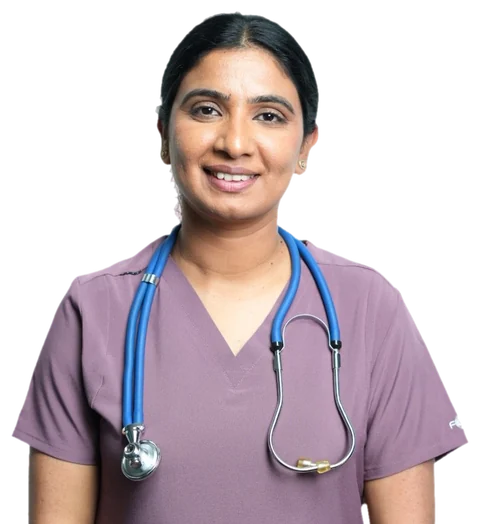
Each province licenses its own nurses, so you apply to the regulator where you want to work. In Mandeep's experience, Ontario, Alberta, Newfoundland and Labrador and Nova Scotia are the most open to internationally educated nurses. RNs write the NCLEX-RN in all four; practical nurses write the REx-PN in Ontario and the CPNRE in the other three. Once licensed in one province, you can transfer to another: Ontario registers nurses from other provinces in two business days.
Which provinces are most open to internationally educated nurses?
These four publish clear routes for nurses educated abroad, and they are where Mandeep sees nurses register most often. Each one sets its own rules for credentials and recent practice.
| Province | Regulator | Credential report | Recent practice |
|---|---|---|---|
| Ontario | College of Nurses of Ontario (CNO) | WES, ICAS or ICES, or NNAS Expedited | Paid practice or graduation in the past 3 years; SPEP if older |
| Alberta | CRNA for RNs, CLHA for LPNs | IQAS, WES, ICAS, ICES or CES, or an NNAS report | RNs: 450 hours in 2 years, or 1,125 in 5. LPNs: 1,000 hours in 4 years |
| Newfoundland and Labrador | NL College of Nurses | WES, U of T CES, ICAS, IQAS, ICES or NNAS | Graduation in the past 3 years, or 1,125 hours in 5, or 450 in 2 |
| Nova Scotia | Nova Scotia Nursing and Midwifery Regulator (NSNMR) | A credential assessment or NNAS report, if your verification of registration does not show your education | Practice in the past 3 licensing years, or 320 hours in the past 5 |
How do I become a nurse in Ontario?
You get a credential assessment from WES, ICAS or ICES (or an NNAS Expedited report), apply to CNO, and write the NCLEX-RN or REx-PN once CNO finds your education substantially equivalent. English, recent practice and a Transition to Practice course can be completed after the exam. If you already hold a US licence, see what US-licensed nurses need for Ontario. If your practice is more than three years old, CNO's supervised practice program, SPEP, can cover it. Read the full Ontario guide, or, if you trained in India, how to become a nurse in Canada from India.
How do I become a nurse in Alberta?
RNs apply to the College of Registered Nurses of Alberta (CRNA). You need 450 hours of practice in the two practice years before you apply, or one of these within five: 1,125 hours, an approved nursing program, RNCCAP, or a bridging or re-entry program. CRNA accepts CELBAN or IELTS Academic for English, and says a decision can take up to four weeks once it has everything.
Practical nurses apply to the College of LPNs and HCAs of Alberta (CLHA) with 1,000 practice hours in the past four years, or graduation in that time. Once approved to write the CPNRE, provisional registration lets you work under supervision while you wait, for up to one year. Compare Ontario and Alberta.
How do I become a nurse in Newfoundland and Labrador?
The NL College of Nurses licenses RNs and LPNs; it formed on 15 April 2026 when the province's two nursing colleges merged. If your entry-level nursing education is from Australia, Hong Kong, Ireland, India, New Zealand, Nigeria, the Philippines, the UK or the USA, you meet the RN education requirement without a competency assessment. Everyone else takes the Inspire Global assessment first.
NNAS is not required: your credential assessment can come from any of six providers, and it must reach the College before you apply. The College decides within 30 business days of a complete application. Approved RNs can register for the NCLEX-RN and get a 4-month temporary licence if they have a potential job in the province.
How do I become a nurse in Nova Scotia?
The Nova Scotia Nursing and Midwifery Regulator (NSNMR) replaced the Nova Scotia College of Nursing. You need a current licence in good standing where you practise now, an approved entry-level general nursing education, and recent practice: practice in the past 3 licensing years, or 320 hours in the past 5, or a recent re-entry or bridging program. The route depends on your situation:
- RNs practising in the USA apply directly, with no NNAS assessment.
- RNs licensed in the Philippines, India, Nigeria, the UK, Australia or New Zealand with a Nova Scotia job offer ask the employer to send the offer to NSNMR, which then explains how to apply.
- Everyone else gets an NNAS Advisory Report first, then contacts NSNMR.
NSNMR processes applications with a Nova Scotia job offer first, then the rest in order of receipt. From 1 December 2026 you must be legally authorized to work in Canada at the time you apply, as a condition of registration and licensure.
How do I become a nurse in British Columbia?
The BC College of Nurses and Midwives (BCCNM) licenses nurses in British Columbia. Practical nurses there are Licensed Practical Nurses and write the REx-PN; in BC, RPN means registered psychiatric nurse. To apply, you must have finished your nursing education or practised consistently as a nurse in the last 10 years. Nurses educated outside Canada then apply to two bodies at the same time:
- Inspire Global Assessments checks your identity, English and education (from a credential report an approved agency sends it), then assesses your competency with a computer-based test and a simulation lab. You may need to travel to Vancouver once for the in-person part. One assessment covers RN, LPN and health care assistant; psychiatric nursing has its own. The application fee is $600 plus GST.
- BCCNM, where you open an account and apply for a practising licence. Your employers and regulators send their verification forms to BCCNM directly, in English. BCCNM compares your education and practice with BC's standards and may ask for transitional education, from one course to a full bridging program.
- The NCLEX-RN, or the REx-PN for LPNs, once BCCNM tells you that you are eligible. When everything except the exam is done, a provisional licence lets you work while you prepare.
BC helps with the cost. Health Match BC's IEN Bursary Program reimburses up to $17,000, including the Inspire fees, the BCCNM application fee, English tests and up to $10,000 of transitional education. To qualify, BC must be the only province you apply to, you must never have been registered as a nurse elsewhere in Canada, you need a Social Insurance Number and a Canadian bank account, and you sign a return-of-service agreement with BC's Ministry of Health.
BCCNM sets no limit on NCLEX-RN attempts while your application is valid, with at least 45 days between them. A provisional licence is stricter: you must pass within two attempts, and after a second fail it ends four to six weeks after you are told. BCCNM also says you must complete and submit your application yourself, and warns against agencies that charge to fill it in. Focused Nursing Prep Classes works within that rule: in BC we guide you through Inspire and BCCNM, and you complete and submit your BCCNM application yourself. Nurses educated in Australia, New Zealand, the UK or the US have separate BCCNM routes; for US nurses, see what US-licensed nurses need.
Can I move my nursing licence to another province?
Yes. Once you are registered in one province, the next one assesses a transfer instead of a new application from abroad. Ontario uses automatic recognition: if you are currently registered in another Canadian province and have not registered with CNO before, you can register in two business days with an application, a signed attestation of good standing and the fee. You do not write the registration exam again, and since 1 January 2026 CNO asks for evidence of practice after you register rather than before. British Columbia expects 1,125 hours of RN practice in the five years before you apply. Each province runs its own transfer process, and we help with transfers for every province.
What if I trained with a GNM diploma?
Ontario's RN requirement is a degree, so diploma nurses usually apply there as RPNs. Newfoundland and Labrador and Nova Scotia assess diploma nurses for RN registration case by case. See the routes for GNM nurses.
Not sure which province?See your routes in the pathway checker, or let Mandeep assess your profile on a 15-minute call.
Book a callWhere does Focused Nursing Prep Classes help?
Every application starts with a profile assessment: on a 15-minute call, Mandeep reviews your education, practice and goals. After that we can help with your credential assessment ($250 CAD per application), your regulator application ($250 CAD) or a licence transfer between provinces ($300 CAD), and the 12-Week Comprehensive Review Program prepares you for the exam. See all services and fees. Each regulator alone decides your eligibility, so always follow its instructions for your own file.
FAQ
What else do nurses ask?

Which province is easiest for internationally educated nurses?
In the experience of Mandeep Dhaliwal, RN, Ontario, Alberta, Newfoundland and Labrador and Nova Scotia are the most open. Which one suits you depends on your education, your recent practice and where you want to work: the pathway checker shows your routes, and a profile assessment call with Mandeep confirms them.
Can I transfer my nursing licence from one province to another?
Yes. Once you are registered in one province, you apply to the next one as a nurse already registered in Canada. Ontario registers nurses from other provinces in two business days through automatic recognition. Focused Nursing Prep Classes helps with transfers for every province, for $300 CAD per application.
Does British Columbia help pay for internationally educated nurses' assessments?
Yes. Health Match BC's IEN Bursary Program reimburses up to $17,000 of costs such as the Inspire assessment, the BCCNM application fee, English tests and transitional education. You must apply to BC only, have a Social Insurance Number and a Canadian bank account, and sign a return-of-service agreement.
I trained with a GNM diploma in India and I am registered as an RN in Nova Scotia. Can I transfer as an RN to a province that does not accept diplomas?
Usually, yes. Under the Canadian Free Trade Agreement, a nurse registered as an RN in one province applies to another as a nurse already registered in Canada, not as an internationally educated nurse. Ontario asks for a certificate of registration equivalent to the one you apply for, and BCCNM says RNs registered elsewhere in Canada may be eligible the same way. You still meet each province's other conditions, such as recent practice.
What do I need to transfer my RN registration from another province to Ontario?
If you have not been registered with CNO before, Ontario registers you through automatic recognition within two business days: an application, a signed attestation of good standing and the fee, then proof within seven days that you asked each regulator for a verification of registration and that you requested a police criminal record check. You do not write the NCLEX-RN again. Since 1 January 2026 you do not need evidence of practice to register, but CNO asks for it afterwards: paid nursing work in the past three years, in Canada or abroad.
What if I want to move to Ontario but have no nursing practice in the past three years?
CNO's Supervised Practice Experience Partnership (SPEP) covers recent practice for applicants whose evidence of practice expired no more than five years before they apply, so your last nursing practice or graduation can be up to about eight years ago. CNO's SPEP page does not say how it applies to nurses moving from another province, so ask CNO about your file. Past the five-year limit, you can ask CNO's Registration Committee to review your application.
I am registered as an RN in Ontario. How do I transfer my licence to British Columbia?
Apply to BCCNM as a nurse registered in another province. Its labour mobility page expects 1,125 hours of RN practice in the five years before you apply; with fewer, BCCNM looks at your nursing experience in other countries and how comparable it is to nursing in BC. You also need a verification of registration from every regulator you have been licensed with, employment verification from each nursing employer of the past five years, and consent to a criminal record check.
I graduated in India in 2025 and I am registered as an RN in Ontario. Can my graduation count instead of practice hours in British Columbia?
Not on its own. BCCNM counts a completed nursing program only when BCCNM or another Canadian nursing regulator recognizes that program, so a 2025 graduation from India does not stand in for practice hours. Plan on meeting BCCNM's practice hours requirement instead.
Honest advice, no pressure.
Book a 15-minute call
Talk to Mandeep about your next step and a study plan for your exam date.
- Your next step, based on where you trained
- An honest answer on whether the classes fit you
- No obligation to join a batch
- Licensing help
- 800+ nurses
- Nursing in Canada
- 11+ years
- Classes
- Live online





Thank you.
Mandeep has your details and will be in touch to book your call.
Want a quicker reply?
WhatsApp Mandeep